Historical Hints

Historical fiction. It has to be my favorite genre! Not only do I enjoy reading it, I also enjoy writing it. And as I have read and written it, there have been a lot of things that I’ve noticed. Sometimes it is simple things that will make or break your story.
Characters
1800 – You have this kid who says cool.
Actually, it wouldn’t be a kid at all — it would be a child. And “cool” is totally out of his century.
1750 – All of the families have 2-3 children.
Depending on the culture, some of the families would have had 2-3 children, but that was probably due to deaths of children (during childbirth, as infants). Otherwise, if you’re speaking English culture, families would have had larger families.
1550 – “I’m just kidding.”
What? Your character is having a baby goat? Nay. He would be in jest.
980 – “This is my dad.”
The first known use of “dad” is 15th century (how do I know that? Simple online search). He would most likely be “Father.”
How does your character dress? How do they speak? How do they interact with others? What do they call their grandparents, parents, aunts, and uncles? How do they spend their days? What is their occupation? The answers to all of these questions help set the tone of your historical fiction novel.
Setting
What is the terrain? What do the houses look like? Are the streets crowded and dirty or clean and free of clutter? The more you describe, the more the reader “feels at home” in your story.
Food
What did they eat? Did they have crackers then? Soup? Bread bowls? Salads? Dressing? You could omit these details, or you could do a little research and make your story authentic.
Items
She looked around the parlor.
What did she see? Were there couches (or were they called sofas or settees)? Did the windows have curtains or drapes? What were the colors? The ambience?  Going from the parlor, what is in the kitchen? A butter churn? What about the barn? Are the walls lined with tack?
Things to Remember
Don’t assume. Do not assume that a published fictional book is accurate. It might be a good place to start with research, but don’t use it as the encyclopedia.
Research pays off. But be sure that you’re researching in the right places. The internet has great sources and the library has great books, but anyone today can have a website or publish a book. Check your information — if you find 2-3 places that say the same thing, chances are you’re pretty accurate. And remember: the best place to find solid information is in original documents, newspapers, etc.
Read books that were published in your era. If you’re writing in the 19th century, you have a world of books you can obtain that were written in the 19th century! And who would better know their century than those authors?
Writing historical fiction is the best tool to learning history — and you will unearth some pretty amazing treasures as you research! Don’t let the magnitude of work discourage you from writing. Learn as you go, and be willing to test your historical authenticity.
What makes a historical fiction novel authentic to you? 
What hints do you have for writing historical fiction?

Whose Doctrine?

“Jesus answered them, and said, My doctrine is not mine, but his that sent me.” John 7:16

We would do well to test the doctrines to which we cling. It is easy to get swept into the doctrine of men and then cling to it with a vice-grip, not even weighing it against God’s Word to see if the doctrine is of God. A good test is to consider verse 18 of this passage, “He that speaketh of himself seeketh his own glory: but he that seeketh his glory that sent him, the same is true, and no unrighteousness is in him.” 
Whose glory are we seeking? When someone contradicts a doctrine (or belief, conviction) that we cling to, what is our reaction? Are we grieved because such does not glorify God — or merely upset and try to prove that our way is right? 

Kellyn Roth | Author Interview

Today is the start of a fun weekly event on my blog: author interviews!! Some of these authors, I have just discovered and haven’t read their books yet (like Kellyn), others, I have already read their books, and am sure you’d enjoy them as well.

1) In a nutshell, what do you write​?​
I’d say I write historical fiction with a dash of Christianity. I like the idea of writing romance, but have a terrible fear of it ending up sounding corny. Overdone romance is one of my biggest pet-peeves, and I certainly don’t want to write it! I guess I’ll just have to make sure someone with more common sense than me reads it if I end up writing more romance-y novels. I’ve always dabbled in fantasy and steampunk … but nothing has been good enough to publish as-of-yet. Oh, and I wrote a couple contemporary pony stories a while back that I might rewrite should my adoration of books about horses return. I doubt it, though. 😉

2) What spurred on the desire for writing
​?​
“The voices in my head” is my stock answer for when people ask me this. But, really, I don’t know. I’ve been writing ever since I could talk … poetry, songs, short stories, little bits of prose … and I’ve never stopped. I always loved words and characters. My love for plots came later as I began to read, and I started wanting to make my own. Though for the longest time I had no writerly aspirations.

3) How do you balance writing with living — or is writing your full-time job?

Well, I have a pretty relaxed schedule. I’m homeschooled, and I have an average of 2.5 things to do a week during the school year (not counting church). During the summer, it’s a lot less. I usually am able to find a couple hours to write every day.

4) Who do you hope to reach with your writing?
At the moment, I’m writing for upper middle grade and young adult readers, although I think some adults might be interested, too … it really depends on the person. However, I’d like to write for adults in the future (once I am one myself) and smaller children. I’ve always adored kids (I kind of am one myself still), and I really want to write interesting books for them. Also, I’d like to write light, happy books that a mom could spend an afternoon reading while her toddler naps. I know this sounds shallow, but my main goal isn’t to touch people or bring them to God or anything like that … it’s just to make them happy and give them entertainment,  and perhaps to spark their imaginations a little (which is a goal a bit more worthy). And … that sounds like just Disney … But, you know, Disney’s great, and I have no objections to touching people in my own way like old Walt did.


5) If someone asked you for your best writing tip, what would it be?
Well, I don’t know. I’m a rookie writer myself … I don’t think I have any great advice to share with the world. 🙂 How about, um … show, don’t tell! (wow, the was cliché!)

​6) What are three things that you greatly enjoy doing?

Um, let me see, sky-diving, shooting baby deer, and … ok, I’m kidding, I’m kidding. I’m terrified of heights, and I like Bambi just as much as the next girl. Three things I enjoy doing … let me see … horseback-riding, swimming, and reading (which is kind of a given). 🙂


Links and Books
My website: http://kellynroth.wix.com/author (which I almost never update … and on which the formatting is off)

About the Author
Kellyn Roth lives with her parents, two little brothers, incredibly needy cat, and faithful border collie Gidget on a ranch in the country. She has been reading obsessively since she was seven, writing poetry and short stories since she was eight, and writing novels since she was ten. Her goal is to write historical fiction novels (which slight branches out into other genres) with Christian themes. Her debut novel, The Dressmaker’s Secret, can be found on Amazon.

Getting the Keys in the Ignition (Starting Your Story)

You have an idea. And it really is a great idea. A fantastic idea. But first, you have to get past that blank page. You have to somehow get the key in the ignition and start this story — get the story engine revved and moving
Many would-be writers stop right there. If this describes you, then get your pen out and just start writing! Guess what the first draft of a story is called? Wow, you’re smart: a first draft! It means this isn’t the finished product. Some writers go through ten, twelve, twenty drafts before their story hits the public. What do you have to worry about now? Not about getting your story perfect. And not about getting that “gripping first line” perfect. You have to start your story. Get your ideas on paper.
Those of you in the “would-be-writer” group, you may stop reading the article and get to work. 😉
Now, some of you are here and all of your stories start with “Once upon a time” or “The sun rose in the sky” or another cliché idea — anything to get you to the story. If your rough draft is finished, congratulations! You started and finished a story! But. You cannot leave your beginning like that. The first sentence of your story will either engage your reader, or turn them away. It is extremely important! Because of this, 99% of the time, the beginning of your story will need to be changed. For the fun of it, I asked a writer’s group that I’m in, “How many of you changed your first sentence, paragraph, or even chapter, after rough draft?” Guess the answers I got? “A hundred times!” – “Oh yeah, over and over!” Several of them said they cut the first chapter completely out — one of them even cut out the first two chapters. They realized that it wasn’t necessary to the plot they had.
Some of you might be at loss with what to do for a new beginning of your story. I wish I had easy answers, but as I’m still working on crafting the beginnings of my stories, I can only give you some tips and ideas.
     – Write something that will hook your reader in the first sentence or two (“The sun rose in the sky” isn’t very gripping. But what about, “Sarah refused to acknowledge that morning had finally come”?)
     – Choose an interesting first scene (start in the middle of your story — Prince Reginald just discovering that he wasn’t really the prince is more interesting than describing the back story of his life as a prince, which might not be relevant to the tale you’re telling)
     – Raise questions about your character and his/her goals (In the examples above, why did Sarah dread this morning? If Prince Reginald wasn’t the real prince, who was? and why did he live as if he was the prince for so long?)
Two things stop your story and make readers groan:
     – Information dump (“Sandra had grey eyes, sandy-brown hair, she was thirteen, had seven siblings who were ages ___. Her parents were both alive and loved the family and they lived happily together in Texas with their dogs, cats, cows, and rabbits.” — instead, weave this information throughout the story)
     – Back story (where you explain why your character is here and detail their past life after you’ve already started the story moving forward. Immediately going into back story instead of pushing the story forward to the future takes careful skill and purpose)
Thinking about the beginning of your story might be tedious and frustrating, but it is worth it!

I leave you with an assignment: go to your bookshelf and pull out ten books. How many of them entice you with the first sentence? How many take a paragraph? How many are just a little dull? Why? Use these observations as a key to start the engine in your own story.

What are some of your favorite story beginnings? What are some things you do when mastering your story’s beginning? I’d love to hear your thoughts!

Trusting Without Feeling

So often, we want to seeGod at work. To feel Him working. But, we don’t have to see evidence to know that He is there, working in hearts and lives.
“Behold, I go forward, but He is not there; and backward, but I cannot perceive Him: On the left hand, where He doth work, but I cannot behold Him: He hideth himself on the right hand, that I cannot see Him: But He knoweth the way that I take: when He hath tried me, I shall come forth as gold.” (Job 23:8-10)
Sometimes, we just have to trust the promises of God’s Word, even if we feel nothing. As the next verses in this passage indicate, we must continue in God’s way and commandments even if we “feel” no change.
“My foot hath held his steps, His way have I kept, and not declined. Neither have I gone back from the commandment of His lips; I have esteemed the words of His mouth more than my necessary food.” (Job 23:11-12)

Let us not be weary in well doing, for in due season, we shall reap if we faint not!

Cover Design

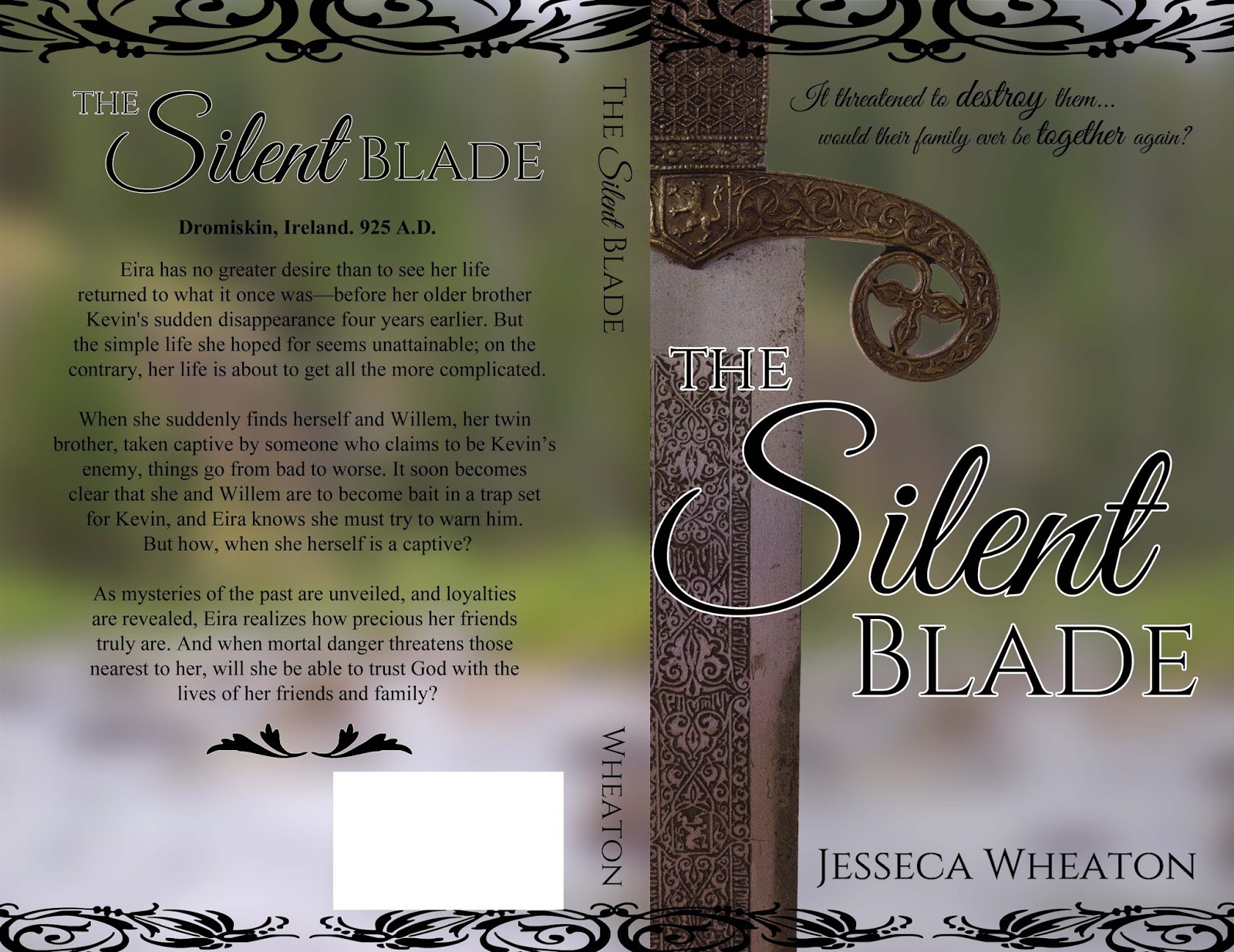
Okay, so I realize that this veers away from my normal writing updates, but since cover design is kind of part of my writing business, why not?

I’m copying this from my personal blog (in case you follow both and find it droll that it’s double-posted… sorry! 😉 ).

Have you ever had those times when you just wanted to do something, so randomly prayed, “Lord, I realize I don’t have to do this, but it’d be nice if…” That was me a few weeks ago. Since all of my writing projects are in the baby-stages of planning and writing, I’ve not had a reason to do one of my favorite hobbies: book cover designing. So, I prayed that, if the Lord saw fit, He’d bless me with the opportunity to design a book cover for someone.

Not even a week after that, I beta-read a book by a Goodreads friend, The Silent Blade. Long story short, we ended up discussing covers and such and she hired me to design her cover! I had so much fun going back and forth, getting to know Jesseca and what she liked, AND finding out that a church-member had a sword for me to photograph! (you never know what happens when you post on FaceBook, “Does anyone have…?”) I am very grateful that the Lord allowed me to come up with a cover that Jesseca loves. That makes it completely worth it for me!

Okay, okay, some of you probably skimmed over all of that so you could see the cover (because, after all, if you’re like me, looking at covers is one of the best things ever!). Here it is!

And the full cover:

For those of you who love reading, The Silent Blade will be releasing on July 22, 2016. I may post about it on my blog, but in case not, Jesseca surely will post about it on her blog, so follow her there!


What’s a prayer that God answered for you recently?
The Silent Blade | Cover Design

Have you ever had those times when you just wanted to do something, so randomly prayed, “Lord, I realize I don’t have to do this, but it’d be nice if…” That was me a few weeks ago. Since all of my writing projects are in the baby-stages of planning and writing, I’ve not had a reason to do one of my favorite hobbies: book cover designing. So, I prayed that, if the Lord saw fit, He’d bless me with the opportunity to design a book cover for someone.
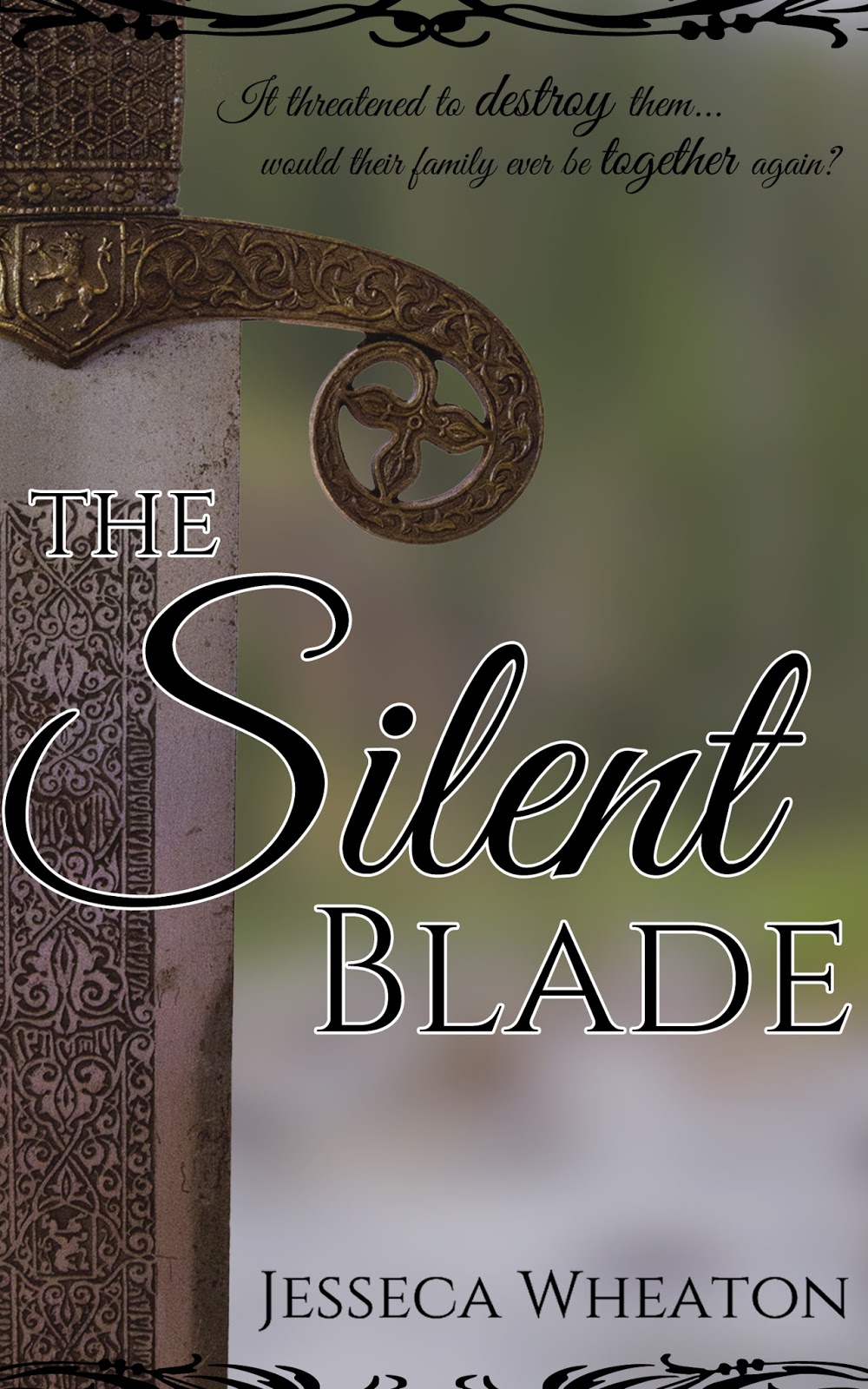
Not even a week after that, I beta-read a book by a Goodreads friend, The Silent Blade. Long story short, we ended up discussing covers and such and she hired me to design her cover! I had so much fun going back and forth, getting to know Jesseca and what she liked, AND finding out that a church-member had a sword for me to photograph! (you never know what happens when you post on FaceBook, “Does anyone have…?”) I am very grateful that the Lord allowed me to come up with a cover that Jesseca loves. That makes it completely worth it for me!
Okay, okay, some of you probably skimmed over all of that so you could see the cover (because, after all, if you’re like me, looking at covers is one of the best things ever!). Here it is!

And the full cover:

For those of you who love reading, The Silent Blade will be releasing on July 22, 2016. I may post about it on my blog, but in case not, Jesseca surely will post about it on her blog, so follow her there!

What’s a prayer that God answered for you recently?

Giveaway Winners!

The fun time has come for drawing the giveaway winners for “Surrender” and “The Solid Rock!” While I greatly wish everyone could have won, the winners are …

Jewels for Surrender
Rebekah E. for The Solid Rock

Congratulations! I’ll be sending an email your way!!!!