Retellings: Abigayle and Andora’s Folly

Today marks the last day of my retelling blog series. It has been fun for me to get to know these lovely authors and their works. I know my TBR list has grown!


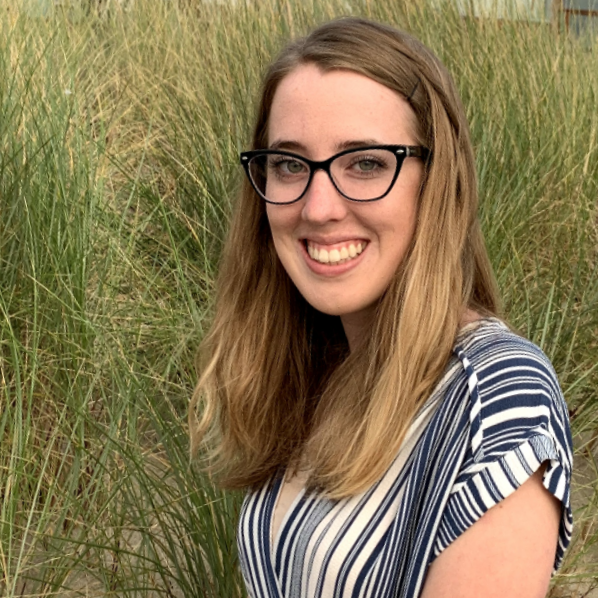
Meet Abigayle…
Abigayle has picture proof of being enchanted by books since before her first birthday. Jotting down her story ideas in spare journals and word documents came later, leading her to self-publish her first novel at eighteen. Now she’s dedicated to not only creative writing but to helping fellow storytellers refine their own words … when period drama films and wild mushrooms haven’t sidetracked her. None of her successes—from completed drafts to winning awards—would be possible without the support of her large family, online community, and Savior.

Website: www.abigayleclaire.com
Blog: www.theleft-handedtypist.blogspot.com
Social Media: @abitheauthor

Abi’s Retelling…


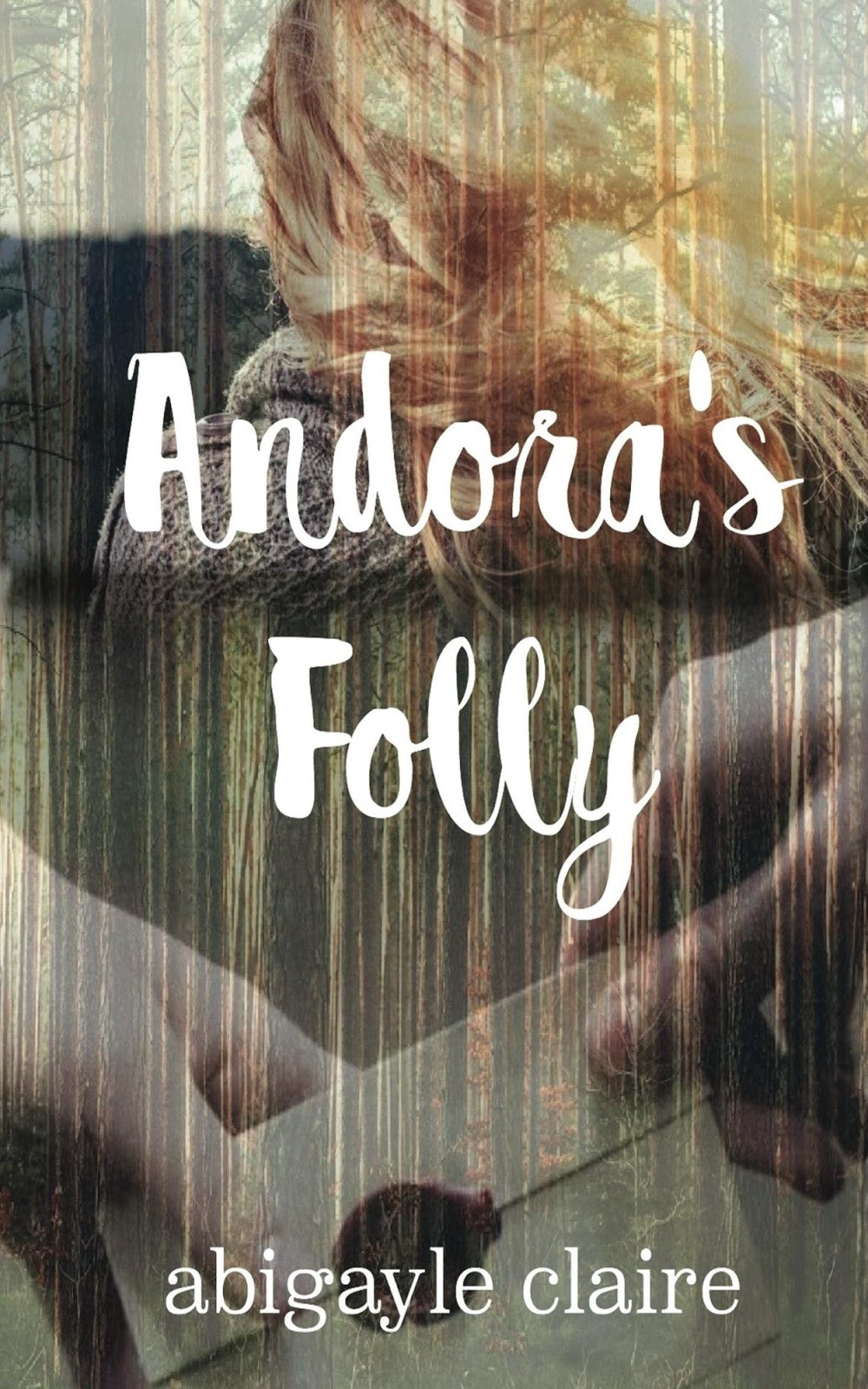
A Pandora’s Box retelling


Andora is a beautiful young woman with insatiable curiosity. Raised in splendor, she is spoiled by her privileged life. When a love letter is slid under her door, her life takes a drastically unromantic turn. Nothing makes sense–her arranged marriage, the gifts her parents bestow on her wedding day, or her new husband’s temperament. 

As Andora begins to unravel the mysteries around her, she ignites a chain of events that have the power to sabotage her entire village forever. Only her new-found wisdom as a desperate peasant’s wife can save her from her folly.


A Note from Abi…

If Amanda’s blog series has taught you anything, it should be that retellings are pretty common these days! When I decided to give a retelling a try for a writing challenge, I set out to find an obscure fairy tale to retell. Everyone retold fairy tales, right?


I struggled to find anything that caught my interest among the obscure fairy tales and anything that hadn’t been retold a million times among the common ones. Even most Disney princess stories are retellings, as the originals are much darker.


Then I remembered my love for Greek myths. Choosing a myth rather than a fairy tale was something a little different. Yet I decided on Pandora’s Box, a concept people are generally familiar with, even if they don’t know the story itself. This allowed an air of familiarity to play in my favor without giving my audience a whole bunch of pre-conceived notions of how my version of the story “should” to go. This also meant I could spend time developing the details.


Purposeful Details


One of my favorite parts of storytelling is infusing the details with purpose. For Andora’s Folly, I did this particularly with the character names. Andora was an easy substitute for Pandora, and for several characters, I used their original Greek (or sometimes Roman) name. However, most names are too cumbersome, so Prometheus was renamed Rome and Epimetheus was shortened to Theus. This was a fun way to draw parallels to the Greek lore and still give my own twist. 


Since I set Andora’s Folly in medieval England, I tried to keep it as historically accurate as possible. Because Greek lore is already so fanciful, I spent my energies grounding it in the real world, thus making it more relatable. I still blended some cultural traditions (like the names), historical elements (a potter and a shepherd), and myth with reality where I could. This meant most people consider my novella non-magical fantasy than true historical fiction. That sort of creative liberty is where the fun—and the challenge—came in.


Creative Liberties


As with any retelling, you have to eventually commit to departing from the original story in order to really make it your own. Come to find out, this was the hardest part for me. A well-done retelling merely springboards of some element of the original. The Pandora’s Box element I chose to anchor my version was the theme: a naive girl caving to curiosity and unwittingly unleashing a myriad of horrible “creatures.” 


Pandora’s Box itself is a retelling of the biblical story of Eve and the Fall. But Pandora’s story ends after she releases evils into the world. I wanted to write the end to her story. I set my character Andora in an already fallen world so she could have a character arc where she faced the consequences of her actions and learned from them. This was a fun theme to build on, easily lending itself to drama. And that’s finally where the pieces of my story were invented, falling into place to produce Andora’s Folly.

Retellings: Kendra and The Worth of a King

We’re winding down all of the amazing authors and their retellings for my retellings series. I’m happy to introduce you to our second-to-last author, Kenda.

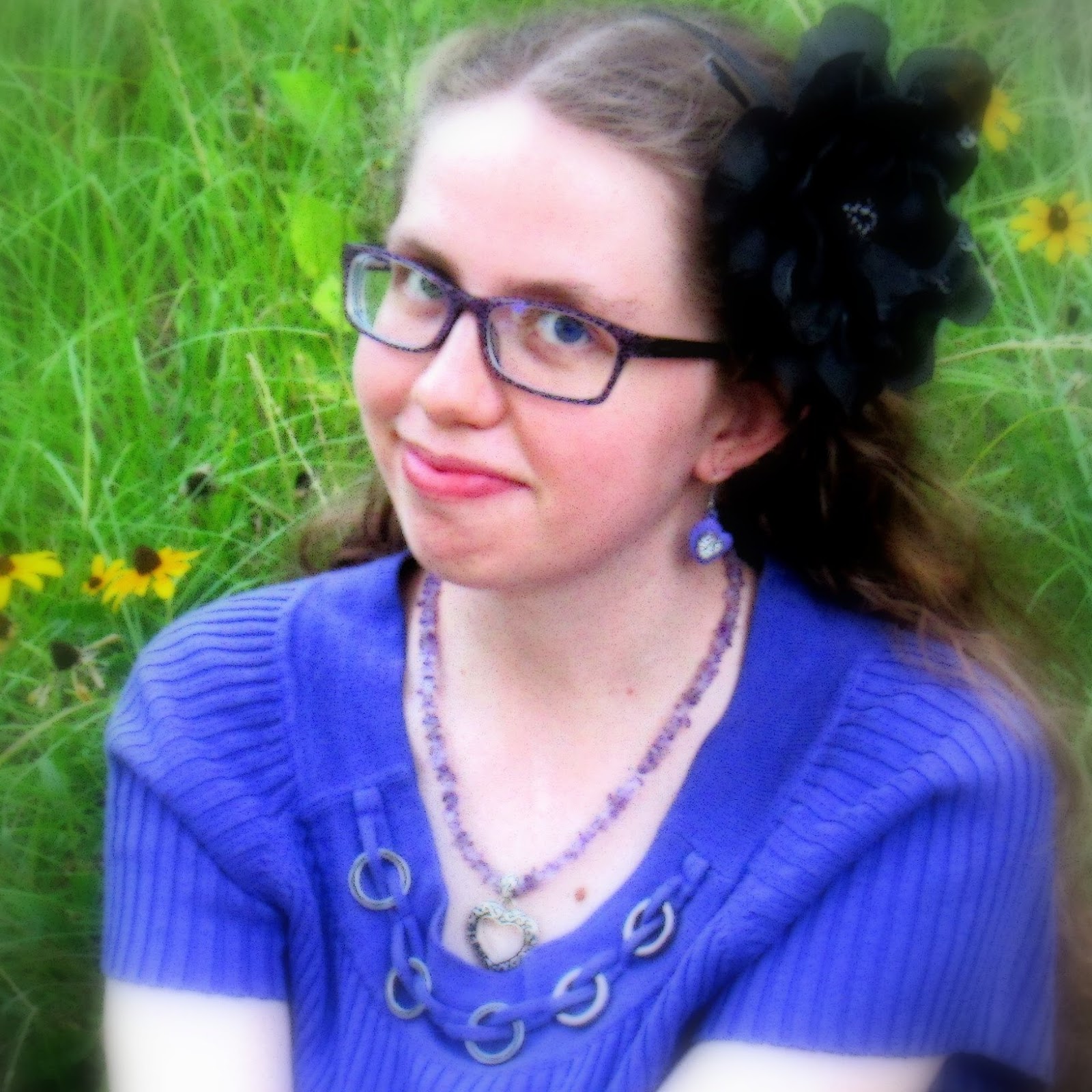
Meet Kendra…

Kendra’s Retelling…
Book Description:
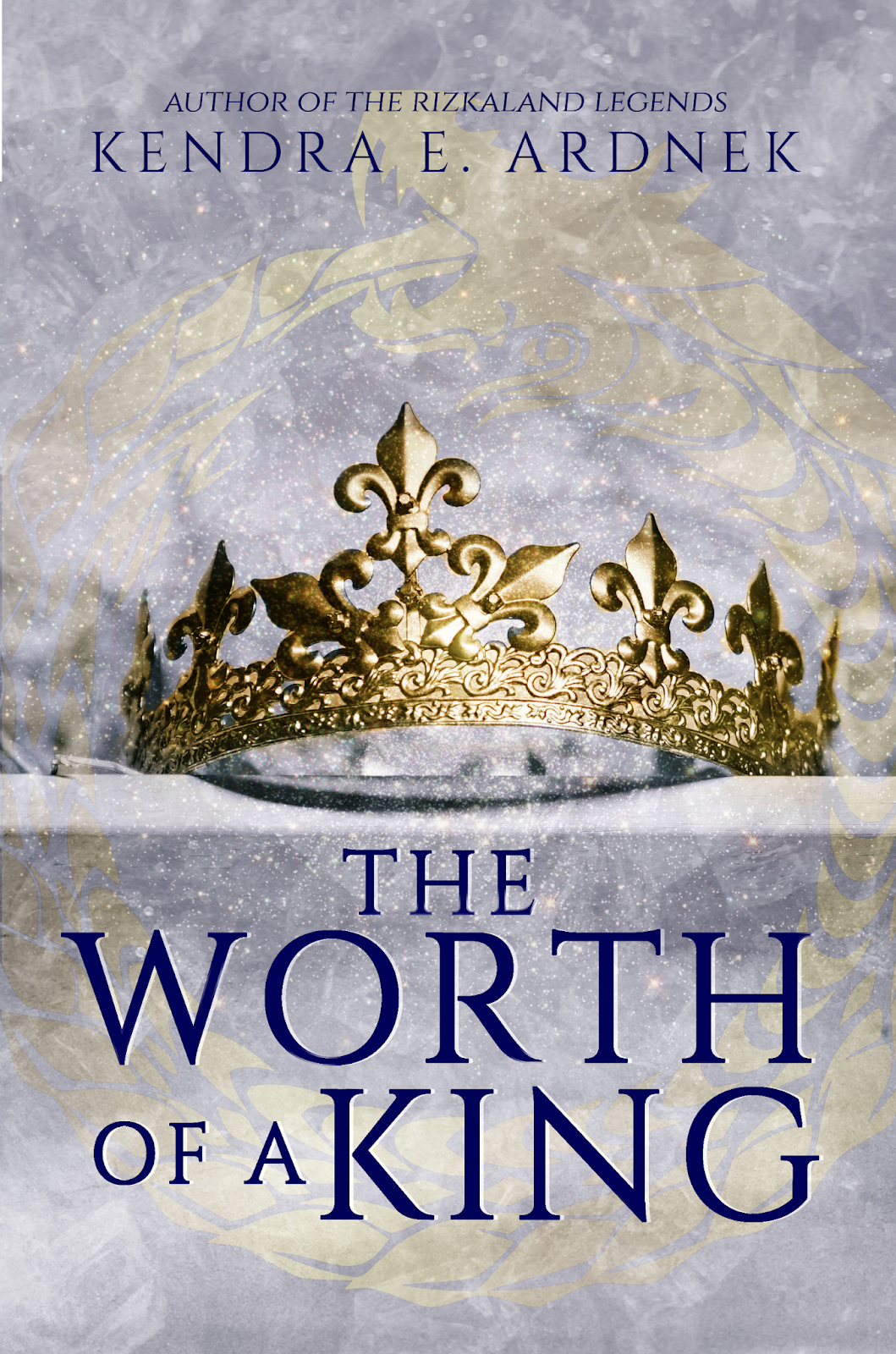
Princess Obsidia’s father was killed the night she was born. Since there was no male heir, the crown went to the man who killed him, by Dialcian law. This never bothered her, growing up, and when it comes time for Obsidia to choose her husband, she chooses Prince Delaney, the son of that man, with little hesitation. Only then does her life start crumbling around her.
Adrian expected to live a normal life, taking his father’s place at the print shop when his father retired. But, on his eighteenth birthday, when the princess’ engagement is announced, his world is ripped out from under him when he learns that his life was a ruse, and he is the twin brother to the princess – and expected to take back his father’s throne.
Delaney knows that his country is hovering on the brink of war – and that his father may harbor murderous intentions towards his intended bride due to her Zovordian blood. He wants nothing more than to protect Obsidia and his people, but as merely prince, he has little power against his father.
The ancient war between the Dragons and the Immortal King and Queen is nearing its climax, and the three are already caught in it.


When you Accidentally Retell a Fairytale
A Note from Kendra…

So there you are, confidently typing your story (unless you use pencil or pen – I flop back and forth myself, so have at!). Your story is awesome. The words are flowing and you know that what you have on your hands is definitely the next bestseller…


And then you realize that your totally unique idea might not be as unique as you’d like it to be. Maybe it’s something subtle – as you realize that your romance between your heroine and the outcast cripple has definite parallels to the tale of Beauty and the Beast. Maybe it’s more in your face – in that your whole plot of a fellow hiding in the woods and stealing from the rich to give to the poor … well, it’s just Robin Hood all over again, isn’t it?


Whatever it may be, I’m here to tell you – don’t panic. I’ve been there, it’s not the end of the world. My novel, The Worth of a King was supposed to be a completely original work of fiction, and I might have blissfully published the book thinking it such … but then the Five Poisoned Apples collection happened, and I was working on two other retellings of “Snow White” at the same time … and realized that there were a number of parallels between the fairy tale and my current project. It wasn’t a perfect play by play, but it featured a black-haired heroine who lost a parent on the day of her birth only to have someone who should be someone she trusted try to kill her when she got older, forcing her to flee and take shelter with … not dwarves, but the villain did have magic-mirror-esque tool with which to spy on her. 


I’d retold plenty of fairy tales before – to the point where I’d given myself the title of “The Arista of Fairy Tales.” Even when I’m not writing a deliberate retelling, I’ll make references (this one had already included one to Helen of Troy, Tristan and Isolde, and – if you squinted – the Little Mermaid). But I’d never retold a fairy tale by accident. 


But the fact of the matter is that most fairy tales are timeless because, at their core, their stories form the fundamental truths of humanity. Cinderella is the tale of how perseverance and kindness can raise someone from nothing. Beauty and the Beast tells us that love can overcome the prejudice of appearance. Rapunzel says that it only takes one person to break down the walls of isolation. Snow White gives us hope that our lives don’t have to end with one betrayal. The list can go on and on, for there are thousands of fairy tales. 


Fairy tale retellings are popular right now. In a time of shifting values, fairy tales may well be the last vestige we cling to of yesterday’s truths, and retellings are our way of bringing them into this era. Is it any wonder then that their themes will crop up even when they’re not supposed to? 


So if you find a fairy tale or other some such hiding in your book, don’t panic. Embrace the awesomeness!


Retellings: Camille and The Fairyless Tales

Today I’d like to welcome Camille to the blog. As with the other retelling authors, you can find out more about her book in this post–but you can find out even more because she’s having an eBook sale right now for the book we’re featuring today!

Meet Camille…

Camille was raised on a family farmstead, where she milked goats and daydreamed of becoming an author. At seventeen she began writing her first novel, and has kept writing ever since. She now juggles writing, raising a family, and (still) milking goats.

Camille’s Retelling…

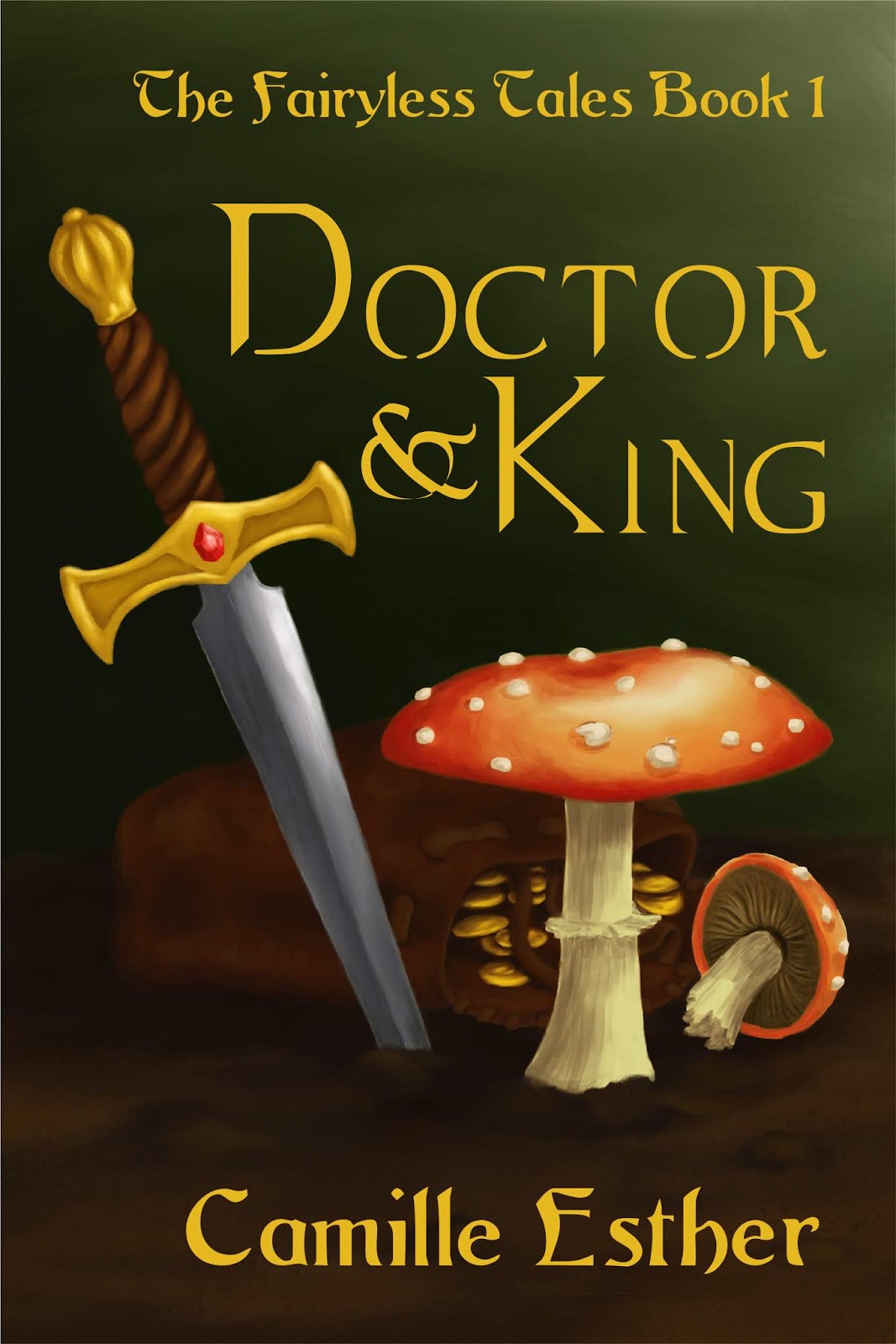
Kissing an apparently dead maiden was not what young king Gervaise had planned for the day. Nor was nursing her back to health and acting as her impromptu protector. Forced to face and counter danger for the first time in his life, Gervaise realizes he lacks the heroism he ought to have.

As the real source of the threat against his patient comes to light, the king-turned-doctor finds himself in the sole position to thwart an ambitious new ruler. But how can he save a kingdom that doesn’t believe it needs saving? And how can a coward such as he win the day with only a handful of men?

Find on Amazon
A note from Camille…
I well remember the first time I saw Ever After. When my mom and sisters decided to watch the Cinderella retelling, I politely declined. Ugh. Romance. Who needs more of that?

“But she climbs a tree in her underwear,” they protested. “You’d like it.”

I caved. I watched it. I loved it.

Kinda on the thin line between historical fiction and historical fantasy, some humor, some adventure, and a romance that wasn’t the sole focus of the story—that was my first taste of fairy tale retellings.
And that is the model I chose for my own venture in the realm of fairy tales. As I got ready to write Doctor and King, I asked myself this question: What real-life events could have inspired the story of Sleeping Beauty?

Then I added another question: How would the story look told from the prince’s perspective?
The result is the rather quirky tale of Gervaise and his struggle to understand true courage.

Retellings: Kirsten Fichter and Once Upon a Twist Tales

Another new-for-me author, and her books sound so amazing!

Meet Kirsten…
Kirsten Fichter is a twenty-something Christian writer who loves being the wife to her favorite person ever, mommy to two precious blessings, a piano enthusiast, a dragon buff, a serious bookworm, and an INFP synesthete. Fairytales have always fascinated her, and she has made it her goal to rewrite as many as possible and become known as the “Grimm Dickens” (i.e. mixing Grimm fairytales with a Dickens style). She is present in many online circles under the name “Kiri Liz” if you care about things like that. As you read this, she’ll be somewhere under a maple tree – trying very hard to finish the seventeen and half other stories she unwisely started all at once.

LINKS
·         My blog (Lianne Taimenlore) — http://liannetaimenlore.blogspot.com/
·         My book review blog (KiriBeth) — http://kiribeth.blogspot.com/
·         My FB Author page — https://www.facebook.com/kirstenfichter/
·         My Instagram page — https://www.instagram.com/synesthetewriter/
·         The Rose and the Balloon on Amazon

Spindle Dreams on Amazon

Kirsten’s Books…

Once Upon a Twist Talesare your favorite fairytales retold backwards and upside-down, with just a little bit of steampunk thrown in for fun.

A Beauty and the Beast Story (Once Upon a Twist Tales, #1)

In a kingdom where fauna and flora are held in higher esteem than breakfast, Dmitri is a prince who yearns for change and plans it in a single daring act that will alter his life forever. However, when his demented mother accidentally causes the destruction of a prized garden of roses, Dmitri is horrified when she proposes his hand in marriage to make up for it. Not only will a wife hamper his glorious plans, he doesn’t even want one. Janelle has spent her whole life on her father’s rose farm, tending the roses and staying simple. But she really yearns for something greater than the flower beds. But now there’s a wrench thrown in the works – the crazy Queen Maeva wants her to marry the prince, and all for ruining her father’s beloved roses. This is Beauty and the Beast with a twist like you’ve never seen it before.

Spindle Dreams: A Sleeping Beauty Story (Once Upon a Twist Tales, #2)
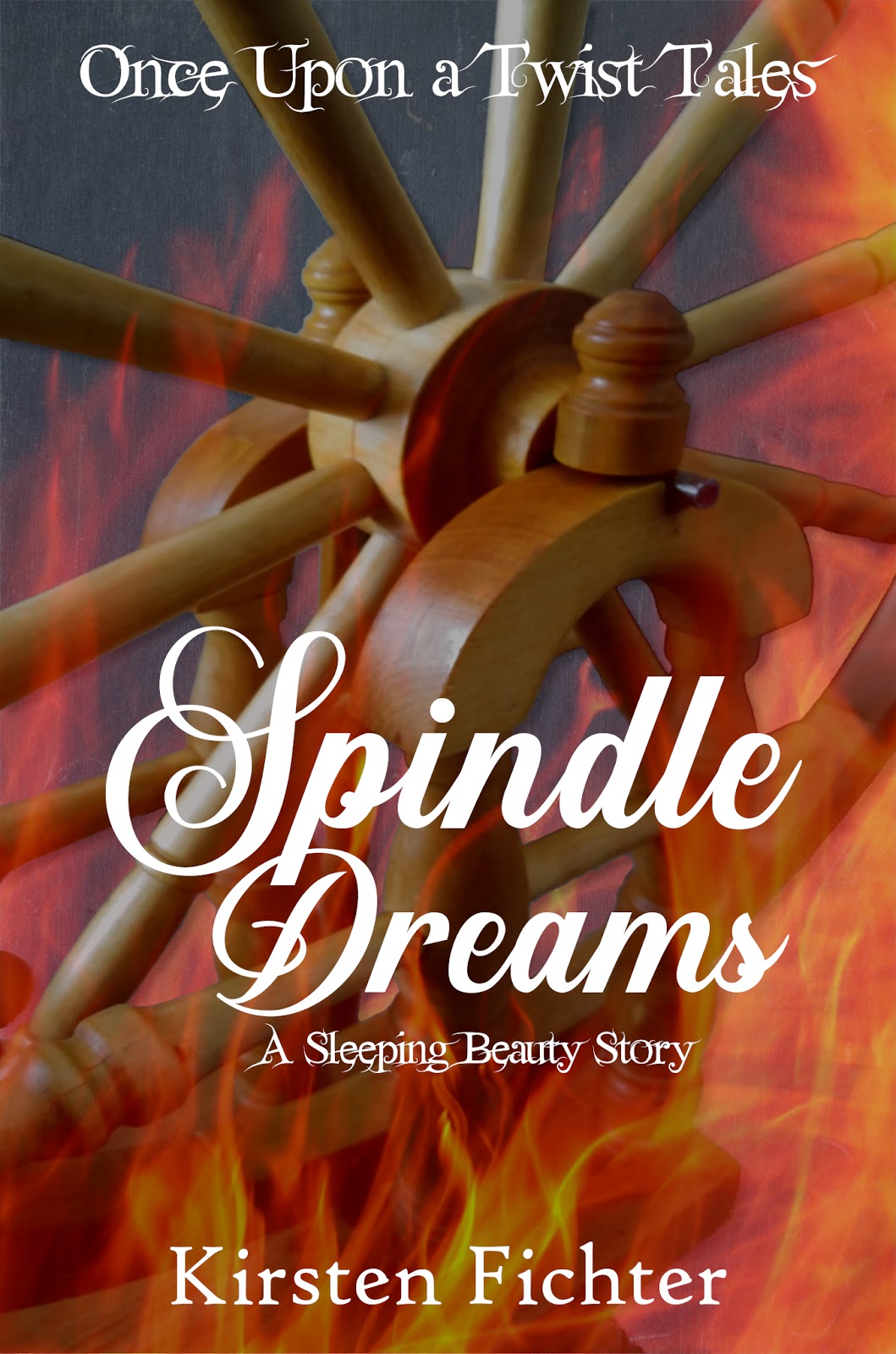
Marita Kadlec is the only daughter of Rohesia’s poorest – and laziest – weaver. Her father prefers to spend his days gambling in the tavern, leaving the spinning up to Marita. She hates the family business because she’s constantly pricking her finger on the spindle. She’d much rather be tinkering on an invention that she hasn’t had the courage to show anyone yet. A special invention that will rid her of spinning for the rest of her life. Felix is a young nobleman plagued with the same nightmare – a giant machine, twisting and clanking, shrouded in fire, bent on pain and death. He’s determined to find out what it means, no matter where the answers may lead him. This is Sleeping Beauty with a twist like you’ve never seen it before.

Coming 2020:  Diamond: A Rapunzel Story (Once Upon a Twist Tales, #3) – Teaser summary: She was never the one locked in the tower, but trying to hide him and his secrets may cost her life. 

Writing Fantasy Without Magic

A note from Kirsten…

I’ll be honest with you — it is very difficult to find fairytale retellings nowadays that don’t include magic. It’s even tougher to find FANTASY retellings without magic. Somehow, someway, magic must be included if it’s to be considered a good fairytale retelling in a fantasy setting, right?
WRONG.
Scratching magic and magical components completely out of a fairytale doesn’t make the story sub-par. True, most of the original fairytales include magic of some kind; that’s what we’ve grown to expect of anything labeled “fairytale.” But… if you know how to handle a good plot, memorable characters, and compelling dialogue, magic doesn’t have to factor in for a second. It’s a challenge — but it’s not impossible.
I appreciate a good challenge. That’s what drove me to writing my own fairytale retellings. Besides myself, I know of very few authors who dare to approach retellings without involving magic of some kind. I’ve seen a lot of writers take to historical fiction as their genre, letting history speak through the fairytale instead of letting magic be the driving force. But I prefer to settle myself fully into fantasy, where I can control more of the details without having to worry about keeping things historically intact and accurate.
Plot and Fairytale Elements
When focusing on a fantasy without magic, plot is probably the most important factor of the story. Plot is always important, whether you have magic or not, since you have to have a good way to keep the story moving forward. But a fantasy story will fall apart if there’s a boring plotline waddling down to the finish. For me, I let the “what if” and “but why” questions influence my plot greatly. A good way to do this with fairytales is to focus on one element of the original fairytale and flesh that out.
For example, with my Beauty and the Beast story, The Rose and the Balloon, I focused on the Beast’s rose. Why was it so important? Why would it be so bad if someone messed with it/picked it? Even though the magical rose counting down the Beast’s years from the Disney film isn’t from the original fairytale, I knew I wanted to play with that. The trick was portraying the rose without its magic. Thus, a bit of steampunk entered my story, and we had a solar-powered rose. From there, the story kinda took off on its own. Magical elements don’t have to remain magical; there are a million and one ways to explain why something happened without having to resort to magic.
Another fun thing to do with fairytale elements is to turn them completely upside-down. What if Sleeping Beauty’s prince was the one with sleeping problems? That was the beginning question that sparked my retelling, Spindle Dreams. Right after that, I found myself asking “what if Sleeping Beauty was a spinner by trade?” Find ways to incorporate as much of the original as possible without involving magic to explain it for you.
Fantasy Genres
That’s the other really fun thing about fantasy. It has so many sub-genres that you’re never truly confined to the medieval-age tale with princesses and long dresses and tiaras. Fantasy has expanded to include aspects of steampunk, political epics, alternative history, and science fiction. And that’s where you start when explaining a fairytale without magic. For the most part, we live in a world that is scientific and has an explanation for EVERYTHING. Let a book without magic do the same.
Consider this: steampunk alchemy would be a perfect solution for a Rumplestiltskin story, would it not? Ancient alchemists were always trying to turn something into gold. What about the magical fairygodmother? She supplies Cinderella with a dress and shoes, so it would make sense for her to be either a kleptomaniac or a seamstress. Rapunzel, honestly, is one fairytale that uses very little magic; instead of a witch, I turned the Gothel character in my retelling, Diamond, into an impulsive and successful gambler.
Fantasy sub-genres give you the leisure to explore a new side of fairytales. No one wants to open a retelling and have it match piece by piece to a Disney film adaptation. Disney is only another reteller when it comes to fairytales. And these sub-genres are something that Disney has yet to fully explore — particularly without magic.
You can keep the fantasy-esque princesses and castles within the retelling, but you’re not limited to that. And I think that’s one of the reasons why we have so few retellings that tell the story without magic. We have a set idea that fairytales MUST include these elements, and so we include them. The beauty about a retelling is just that, however: it is a RETELLING. It doesn’t have to be perfectly parallel with the original. We have the liberty to retell the fairytale in whatever way we want.
Magic: A Short Discourse
Now why bother with taking magic out of fairytales? Is there any harm to having magic in a fairytale? My answer: No, of course not.
Many Christians have problems with magic being present in literature of any kind. God is quite clear about condemning the use of magic in multiple Bible passages. I have done quite a bit of research on the subject, trying to learn for myself what God has to say about it. My convictions on the subject are pretty hardcore, and I realize that this is a highly controversial topic. But here’s what my research has led me to believe and what I uphold within the world of literature. 
The danger with using magic in any book is that magic is real. The witchcraft that God condemns over and over in the Bible isn’t a figment of people’s imagination. It is a demonic power that can be copied in real life, and its source comes directly from the devil. 
Fairytale magic is just that. A fairytale. Legendary, mythical, and pretend. It stands clearly in a world of fantasy/make-believe and cannot be copied in our world. This type of magic, I believe, is not harmful, and is what makes up many of our beloved fairytales. 
For me, personally, writing with magic is a struggle. It can create a lovely, clean tale when used correctly, but it is also very dangerous. Because of that, I have decided to write my own stories without using magic at all. For me, non-magical fantasy, especially fairytale retellings, is an overlooked genre that deserves more attention, more fantastic books. So, if you’re interested in following my writing journey, that’s the niche where I’ll be hiding. 

Retellings: Rachel Kovaciny and Western Retellings


Today’s retelling author is new-to-me, but her books look so creative and fun! I’m happy to get to know more about her with you!

Meet Rachel…

Born only a few miles from where Jesse James robbed his first train, Rachel Kovaciny has loved westerns all her life.  She says they’re where her imagination feels most at home.  Rachel is a Christian wife and mother who homeschools her children.  In her spare time, she retells fairy tales as westerns and writes a column to the Prairie Times as well as contributing regularly to the online magazine Femnista.

Rachel Kovaciny’s first stand-alone western, Cloaked, debuted in 2017 and was a Peacemaker Award finalist for Best YA/Children’s Western Fiction.
Writing & Movies blog: https://hamlette.blogspot.com/
Rachel’s Retelling…
Twelve Dancing Princesses… re-imagined. 
Fifty dollars just for asking a few questions? Jedediah Jones figures it must be his lucky day. What dancing and doughnuts have to do with anything, he neither knows nor cares. He’s only interested in earning that money so he can finally eat something other than the apples he’s been living off for days. Once his stomach and his pockets are filled again, he plans to move on. 
But answering the advertisement plunges him into a forest of painted trees, twelve pretty sisters, trouble, and more trouble. And, yes, doughnuts. 
So many doughnuts. 
Can Jedediah Jones solve the mystery and earn that fifty dollars when the whole town has failed? Or will the twelve sisters lose their family’s business no matter what he does?
Behind the Retellings
A note from Rachel…

Thanks for having me here today! 
Somewhere around 2012, I got the idea of retelling fairy tales as westerns, but it stayed just an idea I kicked around a while until 2015, when I decided to enter a contest from Rooglewood Press focused around retellings of “Sleeping Beauty.”  My entry, “The Man on the Buckskin Horse,” was one of five winners which were then published in the anthology Five Magic Spindles in 2016.  Encouraged by that success, I next retold “Little Red Riding Hood” as a western, which became my book Cloaked.  I followed that up with Dancing and Doughnuts, which retells “The Twelve Dancing Princesses.”
That initial idea for retelling a fairy tale as a western was sparked by reading a picture book version of “The Twelve Dancing Princesses” to my small children.  It’s long been one of my absolute favorite fairy tales, and it struck me one day that the former soldier in the fairy tale could easily be translated into a Civil War veteran.  I love the frolicsome feel of this particular story, and tried to capture that in my book.  Although the characters are faced with problems, they’re not in any kind of life-or-death danger, unlike my previous retellings.  That made Dancing and Doughnuts especially fun to write.  I also had a good time trying out many doughnut recipes from the 1800s until I could find one that matched the ones in the book fairly well.  My husband says this is the kind of research he’s especially fond of.
I love studying history, so much so that I kind of accidentally got a history minor when I was in college.  I kept taking history classes for fun whenever I had an empty spot in my class schedule, and I accumulated so many that I qualified for a minor without meaning to.  I also love reading historical fiction because seeing how people lived in times gone by helps me understand and appreciate my own life in new ways.  So writing historical fiction myself is something of an obvious choice.  I truly enjoy things like doing the research to get everyday details correct, studying the history of the west to find the right place to set a story, and checking on the etymology of words so I don’t use a word in a character’s dialog or thoughts that isn’t period-correct.  Those might be boring for another writer, but for me, they’re a joy.
I’ve loved western movies since I was a toddler myself – I grew up watching the westerns of John Wayne and James Stewart and their contemporaries.  I also very much enjoyed what I called “cowboy books” when I was a kid, and I want to bring that same pleasure to today’s readers.  I think that fairy tales and westerns are a natural fit for each other because westerns are America’s mythology. 
My books do not have to be read in a particular order because they don’t tell one continuous story the way some book series do.  Instead, I call Once Upon a Western an anthology series because each book stands on its own, but they all take place in a shared universe.  The characters from these first two books may show up again in later books in some capacity.  And I’m gradually writing and releasing short stories that expand the universe and will eventually help to connect the novels more too.  So far, I’ve released two, which are available for free for Kindle, Nook, and Kobo.  “No Match for a Good Story” is based on the story of Scheherezade and is a follow-up to “The Man on the Buckskin Horse,” and “Blizzard at Three Bears Lake” retells “Goldilocks and the Three Bears” and is a follow-up to Cloaked.  This month, I’m releasing a new short story called “Gruff” that also follows Cloaked.  I think you can probably guess what fairy tale it revolves around.
I’m currently retelling “Snow White and the Seven Dwarfs” as a western called One Bad Apple.  It features seven white orphans who get taken in by a wagon train of former slaves, only to discover that one member of that wagon train is a very dangerous woman with deadly intentions toward her stepdaughter.  I’m in the process of revising One Bad Apple, and it should be released in early 2020.

Retellings: Hope Ann and The Stealthmaster’s Shadow

Today, we have Hope Ann visiting with her 12 Dancing Princesses retelling!

Meet Hope Ann…

Hope Ann uses chocolate to bribe a wide ring of spies, from the realm leapers of Aslaria to the double agents of Elkbend, for their stories. Based in Indiana, she is the self-published author of the Legends of Light series, a personal writing coach, and writes the Story Embers newsletters. You can find out more about her at authorhopeann.com


Hope’s Retelling…

It’s been ten confounded years since the war ended.

Verus, a retired soldier, determines to enforce the peace the victory ought to have brought. His wanderings bring him to the city of Nerva, a sprawling riverside chaos no other Stealthmaster will touch.

Commandeering the task of a former comrade, Verus presents himself to the governor and promises to search out hidden Subverters. The true reason for his actions he keeps to himself. After all, the tyrannical governor will hardly approve of lending aid to those pitted against him, but the Subverters need information. Maybe even weapons.

The wishes of the Subverters themselves are immaterial. They weren’t there during the war. They didn’t see the horrors Tauscher spread.

Verus has.

So has the new ambassador from Zahavia who strides through the great doors of the feasting hall, bringing Verus face to face with nightmares from his past.

As the simple mission dissolves into confusion, Verus struggles to help those he’s plunged into danger, from a serving lad to the infuriating woman he’s taken to calling “Princess.” Fleeing will only make the enemy stronger. But staying…

Staying could doom them all.

Perfect for those who love fantasy but don’t have the time to sit down for a full-length novel, the fourth novella in the Legends of Light series presents the story of the Twelve Dancing Princesses in a clean, exciting, and inspiring manner. Full of wit, secrets, danger, and distant threats looming on the horizon, this is more than the mere retelling of a favorite fairy tale.

A stand-alone story, The Stealthmaster’s Shadow focuses on the fourth fruit of the Spirit, long-suffering, while following the results of the war between the Prince and Tauscher.


FIND ON AMAZON.


Sarcastic Renditions: Twelve Dancing Princesses

A note from Hope…

Verus is one of the most sarcastic and dramatic characters I’ve written, and perhaps one of my favorite character to write. Though his story, The Stealthmaster’s Shadow is written in third person, almost everyone I talk to remembers him in first person. I even remember him in first person most of the time because his voice is so strong.
He was a relief to write in more ways than one. I’d attempted a contest with a Snow White retelling directly before his story and it failed. Miserably. I couldn’t connect with the voice or characters. So when it came time to write Legends of Light 4,  I wondered if I could still, well, write.
Then Verus happened.
The Stealthmaster’s Shadow, a retelling of the twelve dancing princesses, is probably my favorite Legends of Light novella so far. Each story is separate, standing alone from plot-wise. It’s the history that carries over from book to book, not the characters.
Verus is a soldier from the ‘confounded war’ that ended ten years ago. He served the Prince. They won.
And the world went on as normal. There’s still pain. There’s still sorrow. And Verus, hiding scars of his own, intends to do what the Prince failed to do and set things right.
In his own way, of course.

Verus didn’t glance back even though at least half a dozen guards must be spilling into the room.
The tavern master’s arm tightened around Eolus. “If it had been any other…” His glare flitted past Verus. “But Diomed is under Governor Osvaldus’s protection and orders.” He broke off.
Verus’s lips pressed tight. Right. If anyone was hunting innocents, it would be Diomed. Shadows edged Verus’s sight as men closed in warily, weapons drawn.Verus pivoted. “Good evening, gentlemen.”The captain of the guard hesitated, one hand resting on the pommel of his sword. His gaze flitted from the chain on Verus’s shoulder to the one in his hand, then to the figure prone on the floor. “We… Stealthmaster, sir. The governor—”“Yes, yes.” Verus held up one hand. “I need to see him too. Half a moment, if you would.”

When I set about to write a twelve dancing princess retelling, the character who fascinated me the most was the man who finally took up the challenge to follow the princesses and watched them dancing each night.
While there’s very little to dance about in this version of the story, Verus shifted into a dynamic character well able to follow anyone who tried to hide.
Of course, this meant he got himself into all kinds of trouble.

“You think all trouble revolves around a group of Subverters?” Osvaldus advanced a step. “If you can’t read the meaning of a locked door—”“It wasn’t locked,” Verus said. “There was merely an obstruction to opening it. A fault I fixed. Without charge, I might add.”The governor’s fist clenched. “Get out.” He splayed the fingers of his other hand against Verus’s chest. “Now!”Verus twisted to the side, shoving the man’s hand off. A flush burned behind his ears. “There’s more than you’re telling me, Governor. You will give me the information I need or you will release me from this contract. I await your pleasure.”“Lift a dagger against me, and it will end up in your chest faster than the north wind itself.”
“Is that what you think?” Verus clenched it tighter. “You’ve given me a task. There’s no need to torture men for information you’ve hired me to find.”

The question Verus has to decide is if those he’s been sent to find are actually worthy of being hunted. And if they aren’t, is betraying them the step needed to open their eyes to danger and force them to safety?
There’s no easy answer. With nightmares from his past closing in around him, Verus’s mere presence may doom those he’s come to care about, regardless of his actions. But the one thing he learned from the war was to depend on no one.
He’s not about to start now when the stakes are so high.

While Verus is completely opposite me in character (ESFJ while I’m an INTJ) working with him did more than explore the problem of pain and sorrow. It helped me delve back into writing and fall in love with characters again. Even the crazy insane ones who are nothing like me.


Retellings: Susanne Dietze and Austen in Austin

Today we’re featuring another Jane Austen retelling!

Meet Susanne Dietze…

Susanne Dietze began writing love stories in high school, casting her friends in the starring roles. Today, she’s the RITA® nominated, award-winning author of over a dozen romances with Timeless Heart. A pastor’s wife and mom of two, she loves fancy-schmancy tea parties, the beach, and curling up on the couch with a costume drama.


Facebook: Facebook.com/SusanneDietze/Books
Twitter: @SusanneDietze

Susanne’s Retelling…

Four Texas-Set Novellas Based on Jane Austen’s Novels

Discover four heroines in historical Austin, TX, as they find love–Jane Austen style. Volume 1 includes:

If I Loved You Less by Gina Welborn, based on Emma
A prideful matchmaker examines her own heart when her protégé falls for the wrong suitor.

Romantic Refinements by Anita Mae Draper, based on Sense and Sensibility
A misguided academy graduate spends the summer falling in love . . . twice.

One Word from You by Susanne Dietze, based on Pride and Prejudice
A down-on-her-luck journalist finds the story of her dreams, but her prejudice may cost her true love . . . and her career.

Alarmingly Charming by Debra E. Marvin, based on Northanger Abbey
A timid gothic dime-novel enthusiast tries to solve the mystery of a haunted cemetery and, even more shocking, why two equally charming suitors compete for her attentions.

Find out about Volume II here.

Note: Susanne’s novella can be purchased separately on Amazon here.

Behind the Retelling
A note from Susanne… 

Austen in Austin Volumes I & II were born out of a conversation between friends.
I belong to a group blog called Inkwell Inspirations, and several years ago (seven, maybe?) we decided to fill a few of our empty weekend spots with backlists of books that fit a theme: Christmas reads, medieval settings, etc. I chose to compile a list of books inspired by the works of Jane Austen, from Austenland to Pride, Prejudice & Zombies to the Jane Austen mystery series to Death Comes to Pemberley. It was a long list!
I asked the gals in the blog if they had any favorites I’d forgotten, and Anita Mae Draper quipped, “I might like Mr. Darcy a lot more if he wore a Stetson.”
That single comment got our minds racing. Mr. Darcy in a Stetson…Austen heroes retold as 19th century Texans in a series of related stories. “Austen in Austin?” I joked. As in Austin, Texas?
It stuck!
Eight of us wanted to participate, so we divided up Austen’s stories to retell (Sense and Sensibility received two retellings, one each for Marianne and Eleanor). Together, the eight of us built a world where we could set our stories: historic Austin, of course, but we needed more. We settled on a ladies’ finishing school, Austen Abbey where our Austen-inspired heroines could either attend, work, or visit. Certain characters, like the headmistress, remained constant through the stories. Some heroines knew one another. Others didn’t. We gave our characters new names, but the stories’ plots were based on the Austen originals.
My story was the Pride and Prejudice retelling, and I named it after a bit of Mr. Darcy’s dialogue: One Word From You. It’s the story of an Austen Abbey student named Eliza who attends a party and forms a most unfortunate first impression of Will Delacourt, a railroad tycoon. 
Supporting characters are easily recognizable as their Austen counterparts (Jane, Mr. Bingley, etc.), but we gave them a Texas twist.
I ended up entering my story in the novella category of the ACFW 2013 Genesis Contest. Unfortunately, the novella category didn’t receive enough entries that year, so it was closed. My entry was moved to the Historical Romance category and…it won! 
Soon after, WhiteFire agreed to publish the stories in two volumes. Our hope and prayer with the collections was that Austen fans of all sorts could enjoy the stories and receive encouragement and entertainment from them. 
We still hope that’s true, but I can also state that we authors were blessed by the experience. Working with friends was a joy and a treat, and we all cherish that book and that time we spent putting it together.

Retellings: Kelsey Bryant, Jane Austin, and the Grimm Brothers

Today we’re hosting another Vintage Jane Austen author, Kelsey Bryant. But she’s written more than just a Jane Austen retelling! This year, she released her second retelling. Keep reading to find out more.

Meet Kelsey…

Raised in a house with hundreds of books, Kelsey has been writing stories ever since she can remember and dreaming of when her books would join the ranks. Now a copyeditor as well, she loves helping other writers achieve their dreams.
Like some of her fictional characters, she grew up homeschooled and makes her home in the Texas Hill Country. To counteract all that time at a desk, she loves being active, especially practicing and teaching martial arts and traveling. But by far the most important thing in her life is her relationship with the Lord.

Kelsey’s Retellings…

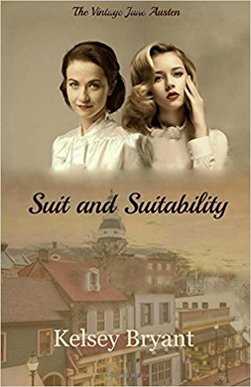
The mystery surrounding their father’s criminal accusations is almost as hard to solve as the many puzzles springing on their hearts.

Canton, Ohio, 1935. Ellen and Marion Dashiell’s world crumbles when their father is sent to prison. Forced to relocate to a small town, what is left of their family faces a new reality where survival overshadows dreams. Sensible Ellen, struggling to hold the family together, is parted from the man she’s just learning to love, while headstrong Marion fears she will never be the actress she aspires to be. When a dashing hero enters the scene, things only grow more complicated. But could a third man hold the key to the restoration and happiness of the Dashiell family?

Find on Amazon


Their lives are saved by a dream. But only friendship can make that dream a reality.

Once upon a time…

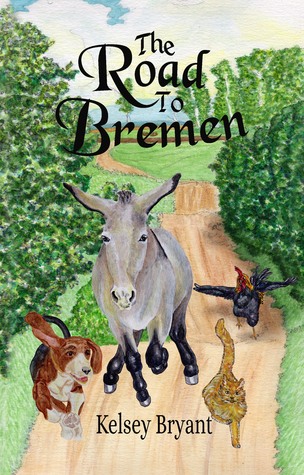
Etzel the donkey is getting old, but he works hard on his farm—until the day Herr Hoffman decides he is no longer worth keeping. With no choice but to escape, Etzel sets off on the road to Bremen to seek his fortune as a musician. On the way, he rescues three other animals—a dog, a cat, and a rooster—who are also old and destined for death.

Will these four new friends find their success and worth as musicians in Bremen? Or does the road hold something better?
Find on Amazon
A Note from Kelsey…
Amanda, thank you so much for asking me to take part in this blog series! I’m honored. These authors have shared pure-gold advice and many interesting things about their retellings of old favorites. To add to the conversation, I’ll mention just a few thoughts that helped me as I wrote my retellings. Hopefully someone else will be encouraged!
Themes
First, I had to find the underlying themes of the original stories so I could use them as themes for my retellings. I had to internalize them so that my retellings were their own stories straight from my heart, or else they would have fallen flat. Readers can tell when authors are merely parroting a story instead of pouring it out of themselves.
For example, from Jane Austen’s classic novel Sense and Sensibility, I pulled out persevering through hardship, finding your way, and unconditionally loving your family and then used those themes to drive my novel Suit and Suitability. I added a stronger Christian element by including the theme of trusting God, which I thought fit very well into the basic storyline that Sense and Sensibility provided me.
From the Grimm Brothers’ fairy tale “The Bremen Town Musicians,” I pulled out the beauty of unlikely friendships, the triumph of unlikely heroes, and the truth that becoming old doesn’t mean you’ve lost purpose. Those themes helped propel my novella, The Road to Bremen.
Plot and Characters
When I embarked on retelling Sense and Sensibility, a fairly long novel in early-nineteenth-century England, I was joining five other authors in the Vintage Jane Austen series. The historical setting was already determined: 1930s America in the midst of the Great Depression. The characters and plot points translated extremely well! So well, in fact, that I had to be careful to make my story different enough from the original. Sense and Sensibility contained many great elements that were tempting to keep intact, but I believe a good retelling changes things up and gives readers some surprises. So I didn’t try to include every character or scene, and I put in plenty of variations to create some suspense. One major example is that I didn’t kill off Elinor and Marianne Dashwood’s father; he was arrested and in prison, and the mystery surrounding the circumstances became a small and diverting subplot.
Retelling a novel with a novel of your own is quite different from retelling a fairy tale or fable or parable. These itty-bitty stories have so much room for expansion and interpretation. I wanted to write a novella-length (or chapter book–length) embellishment of “The Bremen Town Musicians” because it’s always been one of my favorite fairy tales and hasn’t been retold many times. And since it hasn’t been redone that often, I could be free to keep it in Germany (where the story is based), use the same farm animal characters, and follow the basic plot of the original. Adding details and expanding on the few details already in place was crucial here. The setting needed description, the animals needed personalities, and the plot needed new elements to add depth, intrigue, and suspense. My imagination had a whole lot of room to romp around, have fun, and spin those details!
Advantages
I loved my experience with retellings. For me, creating plots is not one of the easiest parts of writing, so having a basic plot to tweak or expand upon gave me a leg up in the writing process that I greatly appreciated. Plus, a widely beloved story that’s been repackaged is attractive to lots of readers, so retellings are beneficial in the marketing department as well.
Have you ever written or thought of writing a retelling of a well-known story? I encourage you to try it! I think it would be especially fun and interesting if you picked a tale that you haven’t seen done before. There are all sorts of novels, parables, fables, fairy tales, and even true stories such as those from the Bible that just beg to be reinvented for the pleasure and edification of readers.

Retellings: Faith Blum and Tales of the East

Watching Faith Blum venture into a new series–Biblical fairytale retellings–has been really cool! I first knew Faith as a Western author but she is here today sharing some great thoughts about her experiences turning fairytales into a historical setting.

Meet Faith…

Faith Blum is a small-town Wisconsin girl. She has independently published over 25 books in over five years. Most of her books are Christian Historical Fiction with an emphasis on Westerns. During an eBook sale, she was #1 in Christian Westerns and Christian Western Anthologies on Amazon. During that sale, she sold over 3,000 copies.
Faith currently resides in Central Wisconsin with her husband and their cat, Smokey. When not writing, you can find her cooking food from scratch due to food allergies, doing dishes, knitting, crocheting, sewing, reading, or spending time with her husband. She loves to hear from her readers, so feel free to contact her on her website: https://faithblum.com.

Faith’s Retellings…


A wicked priestess, a morally corrupt king, and two children stuck in the middle…
Hadassah and Gidal love their parents and will do anything for them. When Priestess Basmat tell Ehud and Jerusha to pay their debt, they cannot and she takes Hadassah and Gidal as her slaves for two years.
The priestess works them hard, but there are two other servants to divide the load with, so they cope as well as they can. Then King Saul comes in disguise requesting the priestess’s other services—as a medium.
Will Hadassah and Gidal trust Adonai to take care of them? What will happen after Priestess Basmat comes face-to-face with the prophet Samuel?
A Hansel and Gretl reimagining


Everything is against them
Born into slavery, Rapha is a Philistine who is almost twice as big as his Israelite masters. They find any excuse they can to beat him. When he is accused of murder, he runs off into the desert, planning to never return and hate all Israelites forever.
Nava’s mother died when she was born.  Since then she has been raised mostly by her father, but her grandmother and grandfather have also helped. Her passion is to help those who need it most, whether it is watching the healer’s young daughter, Rina, or bringing fresh tunics for the Philistine slave who receives far too many whippings. When Rapha runs off into the desert with no water, Nava begs her father to go after him and bring him back safely.
Will Nava’s father find Rapha? Can Rapha learn that not all Israelites are untrustworthy? Will Nava trust her abba and Rapha to Yahweh’s care or take matters into her own hands?
A Beauty and the Beast reimagining set during the time of King David


All he wanted was his father’s approval
Chileab is born to privilege as the second-born of King David, but he still feels like an outcast. His crooked foot make it hard for him to do anything and although he enjoys being an advisor for his abba, he never feels like King David approves of him.
Born with unnaturally light hair, Rina loves helping her mother heal people around their small village. One day, her life is turned upside down when she is kidnapped by two Amalekites bent on using her for her healing powers to make them rich.
When Chileab hears of the little girl who had been kidnapped, he goes off to find her, even though five years have passed.  He makes his way into the desert by himself. Can he find Rina? Will he learn that Adonai’s approval is all he needs? Will he learn to rely on more than just himself?
A Rapunzel reimagining set during the time of King David


Ignored by her father…
Adah was neglected by her abba and her brother. She must do something. All her previous plans have failed, but she won’t slip up this time. Since her abba is King David, author of many songs, what better way to gain his attention than pulling off a concert featuring twelve of his daughters?
As she plans, Adah’s discontentment grows. She throws herself into the work but worry edges into her heart anyway. Can Adah learn to rest in Adonai as her father? Will she learn contentment in all things?
Inspired by The 12 Dancing Princesses fairy tale

FIND THE SERIES ON AMAZON


Writing Retellings in a Series and Historical Setting
A Note from Faith…


I wrote my first fairy tale retelling about five years ago. It was a Beauty and the Beast retelling in the time period of King David. I wrote the draft of it and then let it sit because I was in the process of publishing other books in the Western time period and didn’t want to get distracted by this one too much.

Then I had some ideas. Ideas for other books that could connect to my Beauty and the Beast retelling. Some of the actual basic ideas on what fairy tales to use came from other people—two from my mom—but how I did it was entirely up to me.

Now, I personally prefer to write stores that are in a series but can still be read by themselves without having to read the other books in the series. So that’s what I did with these books. I have some reoccurring characters, so if you want to get their full life’s stories, you would do well to read all of the books, but other than that, reading all of the books is not necessary.

Writing my series was fun. I outlined most of the books before I started writing any of the other books. Mainly because I needed to know which book would be first in the series and which would be last. I knew Trust and Obey—a Hansel and Gretl retelling—needed to be first because it was the only one during the time of King Saul. Love Lifted Me—my Cinderella/Song of Solomon mash-up—needed to be last because it had Solomon as Prince Charming so he needed to be old enough. The other books I needed to figure out exactly where in the timeline they would be and I wrote them accordingly.

As for writing in a time period that actually happened, that was a little trickier. There isn’t a lot of easy ways to find out what living during Old Testament times was like. I borrowed my mom’s Times and Customs of the Bible book she had from her days in Bible college, but even that didn’t tell me everything I wanted to know. I took a few liberties and used my imagination for many things. For others, I read some Biblical Fiction to learn a few more things.

But my biggest help was when I asked my pastor if he had any books that talked more in detail about the betrothal and marriage ceremonies. The next Sunday, he gave me five books about Bible history with bookmarks in the sections that talked about betrothal and marriage! That was super helpful.

My biggest tip for anyone wanting to write any series or Historical Fiction is to try to plan as much of the series before you start writing any of it that you can and then find a guru who is big into the time period you are writing about who can aid in your research. Also, make sure you are reading other books written in the time period. For Biblical Fiction, Lynn Austin has some amazing books! She has been my main source right now.

Have you ever written a fairy tale retelling? Or anything in the Biblical time period?

Retellings: Hayden Wand and Fairytale Retellings

Today we have Hayden with some fairytale retellings of her own–and some great thoughts about the fairytales and questions concerning them.
Meet Hayden…
Hayden Wand has been writing stories since before she can remember, but only decided to pursue being an author after she realized her childhood dream jobs were surprisingly unattainable. (Why is it so hard to get a gig as an international jewel thief or a deadly-spy-slash-private-detective these days?)

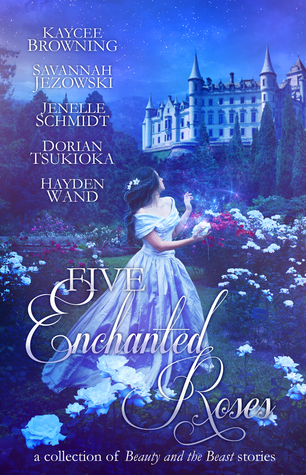
Her novella “The Wulver’s Rose” was published in Rooglewood Press’s FIVE ENCHANTED ROSES anthology, and she is also the author of two more fairy tale retellings: WITH BLOSSOMS GOLD (2017), and JANUARY SNOW (Coming Winter 2019). She lives in South Carolina with her family.

Hayden’s Retellings…

SHE NEVER WANTED TO LEAVE THE TOWER. HE NEVER WANTED TO RULE THE COUNTRY.
Nella has lived quietly in her tower in the woods for over a decade. After dangerous accusations drove her and her grandmother away from their village, they escaped deep into the forest where no one would try to harm them. Now, after her grandmother’s death, Nella is alone, and she is determined to stay that way. She has no patience for a world she deems judgmental and ignorant.
Or so she tells herself. In reality, her paralyzing fear prevents her from stepping foot outside of the tower.
Prince Benedict Allesandro is an adventurer- a rescuer who prides himself on saving the weak and unfortunate. When he hears rumors of a beautiful damsel trapped in a tower, he rushes to her rescue…only to find a woman who most definitely does not wish to be saved.

But when war breaks out, this reckless prince and reclusive maiden are faced with overcoming their deepest fears in order to determine not only their own fate, but that of their entire country.

A life is a high price to pay for stealing a rose. Nevertheless, Bonnie honors her father’s agreement and travels to the remote, ruinous castle wherein dwells the legendary creature known as a wulver—half man, half wolf. Though he is monstrous to behold, this beast is oddly gentle, tenderly caring for his beautiful rosebush, which blooms out of season. Is there more to the wulver than meets the eye? Is he somehow connected to the frightened child who visits Bonnie in her dreams?

Find Hayden’s books on Amazon

The Questions That Drive Fairy Tales
A Note from Hayden…
“But it’s been done before.”
Originality is a haunting concept that hangs over artists of all types—including authors. And perhaps writers of retellings struggle with this even more than others. After all, we know from the start that we are dealing with expanding, twisting, or reexamining something that we know has already been done. But all writers deal with juggling well-known tropes, archetypes, and genre expectations. The trick is how to use those tools effectively—and for someone who writes retellings, the original story is just one of the tools in the box. An important one to be sure, but one that shouldn’t really be all that more intimidating to use than any other.
For me, one of the best ways to effectively retell any well-known story is to focus on the questions the original tale brings up.
Fairy tales are complex and heavily thematic, and at times heavily moralistic. But there is a simplicity to them, too; sometimes, what seems important to us isn’t important to the fairy tale at all! Why did Rumpelstiltskin want the queen’s firstborn child? Why did Rapunzel’s birth mother want forbidden lettuce so badly that she was willing to risk her husband’s life and give up her daughter for it? Did the prince reallythink that Cinderella’s shoe size was so unique that he was sure her foot was the only one that would fit the slipper?
We don’t know because the fairy tales don’t tell us; those aren’t the questions that the themes of the tales are prompting us to answer.
However…
Answering these questions are a great starting point for writing retellings.
For instance, the entirety of the plot of my Beauty and the Beast retelling, The Wulver’s Rose, came from wondering why on earth the beast was so upset that Beauty’s father took one of his roses.
That single question spiraled out in my planning process, so that it became the central issue that the rest of the story hinged on—and one that drove the story’s theme of reparation, redemption, and forgiveness. 
But sometimes, the ways we choose to answer these questions are simple and don’t end up taking much of the story to explain. In my Rapunzel retelling With Blossoms Gold, the reason Rapunzel’s father stole from the “witch” was because of famine; that’s why the wife would die without it, and why he was willing to give up his daughter. However, this ends up in my character’s backstory and doesn’t play a large part in the plot at all. That question simply didn’t became central enough to play such a large part of the story.
And that’s where different kinds of questions come in. The questions that don’t ask “why?” but rather “what if?”
Each of the fairy tale retellings that I’ve written—including unpublished ones—have their driving force grounded in flipping one aspect of the fairy tale and then trying to remain as true as possible to the rest of the story. I’m not looking to be subversive and completely flip the morals or motivations of the original tales on their head, but rather imagine, “what if this one central thing was different?”
For instance, in With Blossoms Gold, the question was, “What if Rapunzel didn’t want to leave the tower?”
For The Wulver’s Rose, without going too much into spoiler territory, the idea was “what if the Beast was trying to break the spell primarily to save someone else?”
In January Snow, my upcoming twist on “Snow White and the Seven Dwarfs,” the question became, “what if Snow White, the ‘innocent princess’ wasn’t innocent at all?”
But what really makes a retelling “click” for me is when the “what if?” questions perfectly intersect with the “why?” questions.
For example, the two questions “Whydoes Cinderella stay with her abusive family?” and “What if Cinderella literally couldn’t refuse to obey her stepmother?” collide in Gail Carson Levine’s Ella Enchanted.
In her Lunar Chronicles series, Marissa Meyer asks the question “What if classic fairy tales took place in the future?” but then utilizes the tools of her setting—technology and space—to create parallel situations to the original stories: a cyborg Cinderella loses her mechanical foot rather than a shoe; Rapunzel is trapped in a orbiting satellite rather than a tower. The core elements and imagery of the original story are still there but they’ve been utilized in an unexpected way—subverting and fulfilling expectations all at once.
Any fairy tale retelling you write can be as traditional or as unconventional as you desire—but pondering the questions that tug at you when you read the original usually gives you a personal investment and connection to the fairy tale. If you want those answers, then your readers can usually tell.

And that gets us invested in finding those answers, too.